Modern military operations demand power. Drones, directed energy weapons, electric combat vehicles, and artificial intelligence systems all require reliable energy to function effectively on the battlefield.
Mobile power grids offer agility and resilience for expeditionary operations, while fixed infrastructure provides stability and high-capacity output for permanent installations. Understanding how mobile power grids compare to fixed infrastructure for military use can help you select a solution that supports your mission’s demands.
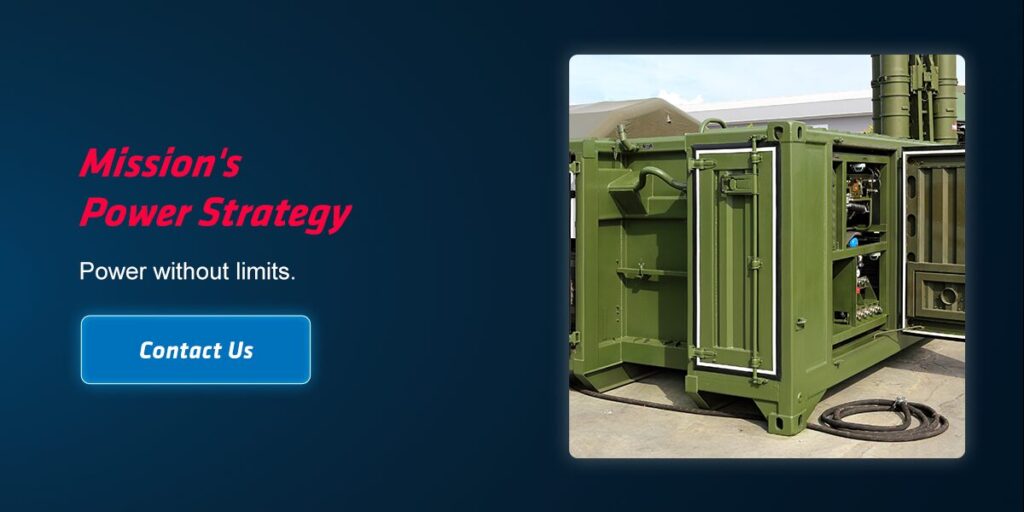
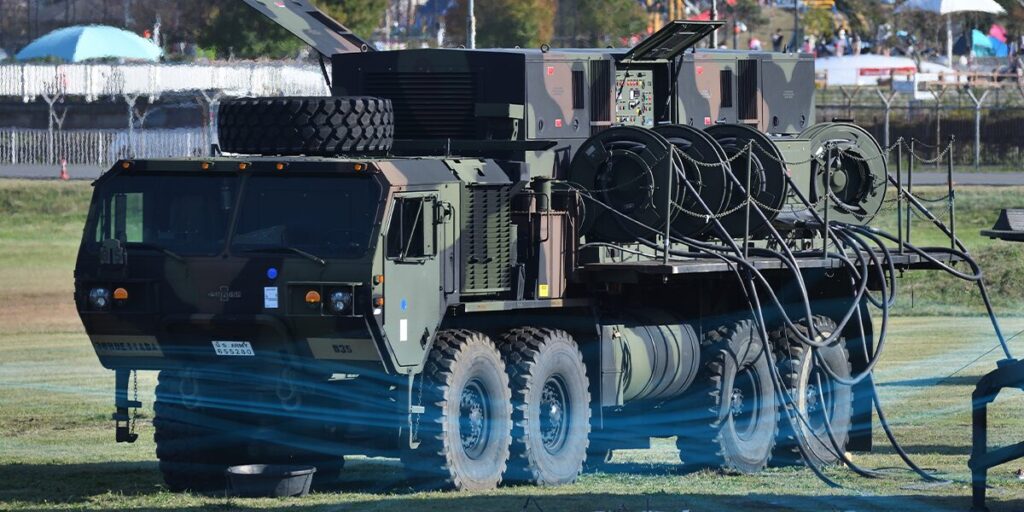
Mobile military power grids are deployable, independent energy systems equipped with smart inverters and battery storage. These systems allow for rapid deployment and repositioning, which makes them essential for expeditionary command posts and units on the move. Their modular design enables military forces to establish power infrastructure quickly in remote or hostile environments where fixed grids aren’t available.
The U.S. Army’s Command Post Integrated Infrastructure (CPI2) program relies on mobile power grids to reduce command post footprints and increase mobility. Units connect vehicles via plugs to create power on the move, transforming how forward-operating bases establish energy infrastructure.
A mobile power grid’s rapid deployment and relocation capability is crucial for temporary missions and forward-operating bases. When operational priorities shift or threats emerge, you can reposition mobile systems within hours. This agility supports the Department of Defense’s emphasis on distributed operations and rapid response capabilities.
A network of smaller, mobile power sources is inherently more resilient than a single, centralized grid. If one node of a mobile power grid is compromised, the rest of the network can adapt and continue supplying power to critical systems. This distributed architecture reduces the impact of targeted attacks or equipment failures.
Mobile power grids also support Secure Tactical Advanced Mobile Power (STAMP) technology, which enables multiple tactical vehicles to link their electrical systems and share power. STAMP significantly decreases fuel consumption and the logistical challenge of transporting spare parts, allowing units to operate longer between resupply missions.
While agile, individual mobile units have a finite power capacity compared to a fixed grid. This limitation can constrain energy-intensive operations or require deploying multiple units to meet demand, which increases complexity.
Managing a fleet of dispersed power-generating assets also creates logistical challenges. Each mobile unit requires fuel, maintenance, and protection.
On the other hand, mobile power grids can create a security challenge because you have multiple, smaller targets to protect. Instead of one large fortified power plant, you might have a dozen smaller generators that could be individually more vulnerable to attack or sabotage.
Fixed power infrastructure, such as civilian electrical grids, large power plants, and permanent substations, remains important for established, long-term installations.
A well-maintained fixed grid offers unparalleled stability and reliability for large or permanent installations. Fixed grids are often necessary for large, permanent bases, data centers, and critical command-and-control hubs that depend on continuous power.
Some fixed grids feature built-in redundancies and fail-safes that help ensure uninterrupted power even in the event of component failure or external disruptions. These protective measures make fixed infrastructure particularly valuable for mission-critical facilities where power loss could compromise national security operations.
Fixed grids also offer higher-capacity output than mobile grids, making them the preferred choice for installations with substantial energy requirements. These systems support energy-intensive operations that run complex computational systems.
A fixed power grid has a significantly higher up-front cost than mobile units. Construction requires substantial capital investment, lengthy timelines, and specialized infrastructure that can take months or years to complete.
The static nature of fixed infrastructure also limits its usefulness for multiple or short-term operations. Once built, these systems can’t be relocated to support changing mission requirements.
While fixed infrastructure is often necessary for large-scale applications, adversaries can target it as a single point of failure, making protection and redundancy essential considerations.
Selecting the best power generation option for your military operations requires evaluating critical variables. Each metric shows how well a system aligns with your mission requirements and long-term strategic goals.
A centralized power plant and a fleet of distributed generators have different maintenance needs. Centralized power plants typically require less frequent but highly specialized maintenance, while mobile power grids tend to require more frequent maintenance across numerous smaller units.
Fixed-power infrastructure requires a smaller team of highly specialized Critical Power Professionals™ with experience in specific large-scale generation systems. Mobile power grids require a larger number of Critical Power Professionals™ with broader training capable of managing diverse generator types from various manufacturers.
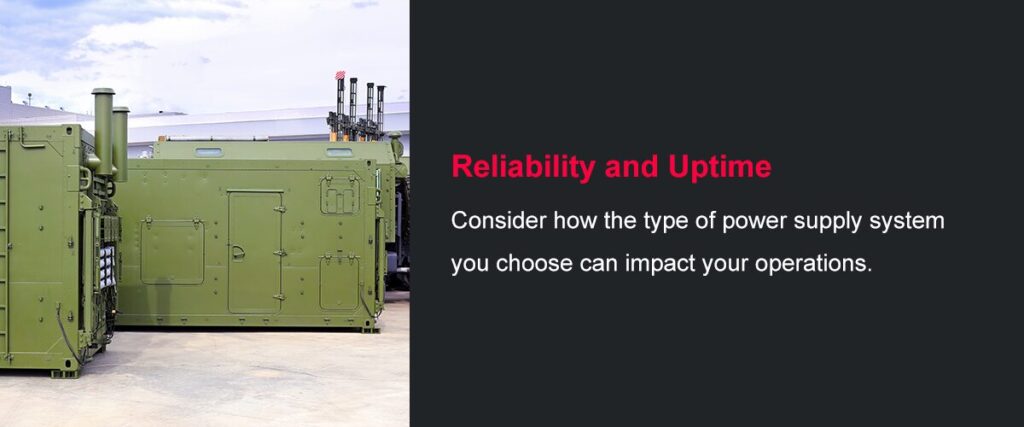
Consider how the type of power supply system you choose can impact your operations. Mobile power grids offer a faster response and recovery time after a disruption because distributed systems can reroute power and isolate failures more quickly than centralized infrastructure. A fixed-power infrastructure provides greater output stability for large installations.
Compare a system’s initial investment to its total lifespan cost. Fixed infrastructure may have higher up-front costs but can offer lower per-kilowatt expenses over decades of use.
Estimate monthly fuel consumption, keeping in mind that mobile power grids can help reduce fuel use through technologies that enable power sharing between vehicles. Calculate predicted maintenance costs over the system’s entire life cycle, including parts replacement, technician labor, and planned downtime impacts.
The best option for your military operations depends on your specific application and needs. Understanding when each infrastructure type excels can help you make strategic decisions that support mission success.
Select mobile power grids for the following operational needs:
Fixed power infrastructure is often the best option for permanent and critical installations. Fixed power infrastructure is essential for established, long-term bases, data centers, and critical command-and-control hubs. These applications require unmatched stability and reliability where relocation isn’t a consideration.
A fixed-power system is best suited for energy-intensive operations such as large-scale simulations, extensive barracks, and advanced research facilities that demand consistent, high-capacity power.
A UPS system provides instantaneous voltage regulation and battery backup during grid failures, which is crucial for combat effectiveness. Whether you choose mobile or fixed power infrastructure, UPS systems are critical for ensuring reliability and protecting sensitive equipment from power fluctuations.
A mobile grid is essentially a collection of mobile UPS units, while a fixed grid needs UPS backup to protect against outages and voltage irregularities.
UPS power provides instantaneous battery backup and voltage regulation during grid failures. In contrast, non-UPS power, often called raw or unprotected utility power, leaves equipment vulnerable to damage from surges, sags, and interruptions.
Nationwide Power offers UPS equipment, batteries, maintenance, and repairs to help you maximize uptime and keep operations on schedule. Whether you’re managing mobile tactical power systems or fixed infrastructure at a permanent installation, our nationwide network of Critical Power Professionals™ delivers comprehensive maintenance agreements tailored to your mission’s needs.
Contact Nationwide Power to learn more and discuss your specific power requirements.