

Some equipment ages like a classic car. But a 33-year-old uninterruptible power supply (UPS) protecting critical systems is not nostalgic because it is a risk. This Nationwide Power™ (NP™) case study shows how one logistics site uncovered hidden component damage after an overcurrent UPS alarm and why a proactive UPS end-of-life replacement plan became the smartest next step.
| Product | Liebert AP301 Series 60kVA (AP366) & CSB HRL12280WFR |
| Application | Transportation, Trucking, Freight, and Logistics |
| Synopsis | The customer contacted Nationwide Power after their UPS transferred to bypass. The load was not lost, but the unit was no longer providing full online protection. The system log showed a previous overcurrent UPS alarm on Phase A. Our goal was to confirm what happened, determine what was safe to operate, and reduce risk. |
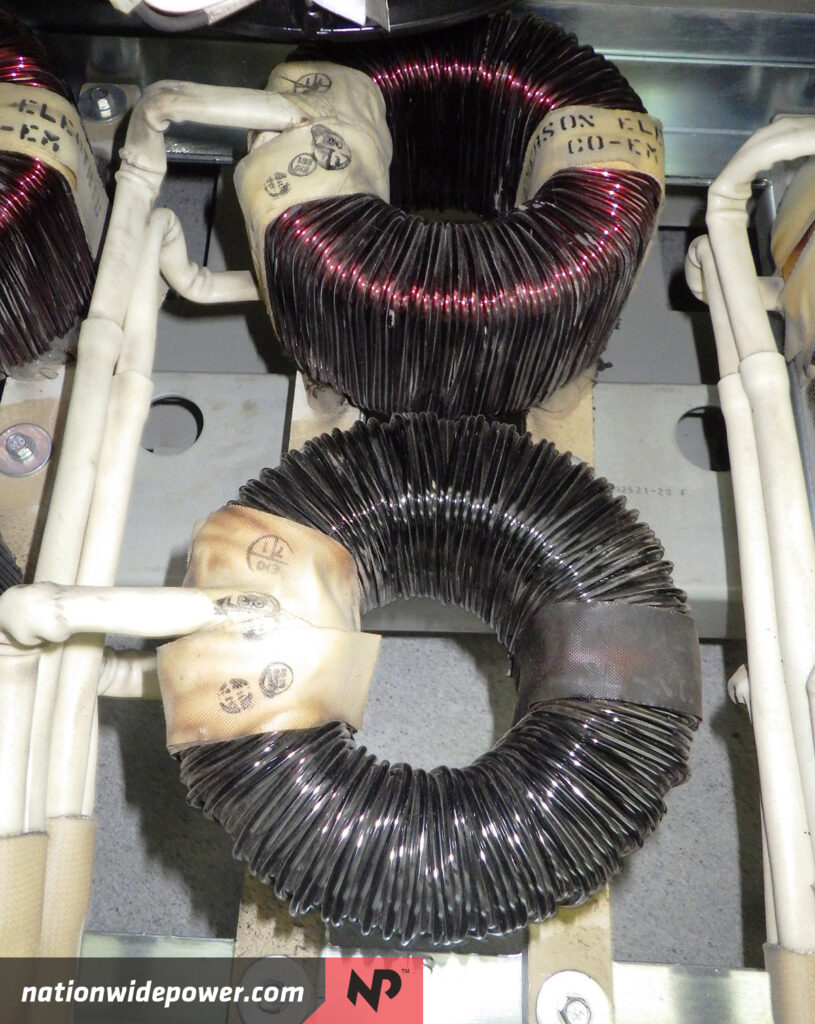
| Preliminary Actions | A Critical Power Professional™ (CPP™) arrived on-site to troubleshoot. After visual and electrical inspection, the rectifier was operating, and the inverter was present, but the UPS remained in static bypass. The CPP rotated the control switch from position 4 to position 1, allowed DC voltage to bleed down, then returned it to position 4. The UPS came online and supported the critical loads. Fifteen minutes later, the CPP smelled burning components and returned the UPS to bypass. The harmonic filter showed overheating, so the CPP disconnected cables and pulled the tray for inspection. |
| Resolution | The CPP left the unit supporting the load through internal bypass and documented parts. Nationwide Power prepared a repair path that included harmonic capacitors, toroidal coils, air-core coils, and after-hours testing. While legacy parts were still available at the time, NP advised that the 33-year-old UPS was past due for replacement. For logistics operations, relying on aging equipment can increase the risk of critical power system failure that disrupts throughput, data integrity, and customer commitments. NP provided a replacement recommendation while coordinating next steps for a smooth transition. |
| Root Cause | The investigation revealed multiple burned components in the harmonic filter tray. Phase A showed a burned L10 inductor, a burned L7 toroidal coil, and an open C4 capacitor assembly. Phase B showed an open C5 capacitor assembly and a burned L8 toroidal coil. The findings indicated a UPS inductor failure and a near-term UPS capacitor replacement need for the C4 and C5 assemblies, along with additional legacy parts. The UPS was very old and well past its practical service life. Even with parts available, additional age-related failures remained likely. |
| Further Reading | When to Repair vs. Replace UPS Repair and Replacement Services Case Study 106 Thermal Runaway |
If you are dependent on an aging UPS and seeing recurring bypass events, unusual smells, or escalating alarms, contact Nationwide Power to request a quote.